
While both A.C. and D.C. motors serve the same function of converting electrical energy into mechanical energy, they are powered, constructed and controlled differently. The most basic difference is the power source. A.C. motors are powered from alternating current (A.C.) while D.C. motors are powered from direct current (D.C.), such as batteries, D.C. power supplies or an AC-to-DC power converter. D.C wound field motors are constructed with brushes and a commutator, which add to the maintenance, limit the speed and usually reduce the life expectancy of brushed D.C. motors. A.C. induction motors do not use brushes; they are very rugged and have long life expectancies. The final basic difference is speed control. The speed of a D.C. motor is controlled by varying the armature winding’s current while the speed of an A.C. motor is controlled by varying the frequency, which is commonly done with an adjustable frequency drive control.
Anhui Wannan Electric Machine Co., LTD

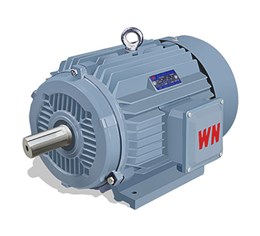 YX3 Series IE2 high efficiency Three phase induction motors
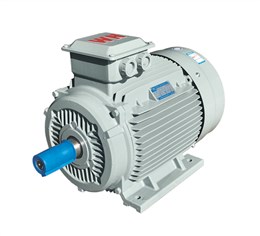 YE3 Series IE3 Super high Efficiency Three phase induction motors
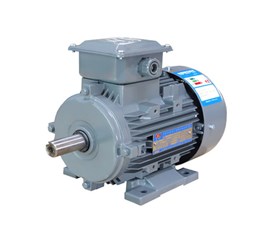 YXL Series IE2 High Efficiency Aluminum Three Phase Induction Motors
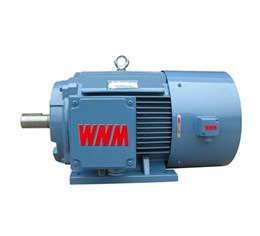 YVF2 Series Frequency Variable Speed Regulation Motors